Access Funds From Your Life Insurance​ —In Days, Not Months

Proven financial support when it matters most. Get a private estimate of what your policy could be worth—without giving up what's most important.

Free Eligibility Check

Get your estimate in under 30 seconds

Answer a few quick questions. No cost, no commitment, and no impact to your policy.

Step 1 of 4
Are you currently seeking financial assistance for cancer treatment?
Step 2 of 4
Do you currently have a life insurance policy?
Step 3 of 4
Do you know the stage of the cancer?
Final Step
Where can we send your free estimate?
Your information is kept private, secure, and never shared.

Fast Eligibility Check

Find out if you qualify in minutes—with a real answer, not a form letter.

No Pressure

Explore your options freely. No fees, no obligation—ever.

Dedicated Experts

Speak with specialists who guide you every step of the way.

How It Works

Three simple steps. That's it.

No paperwork marathons. No confusing jargon. Just a clear path from question to funded.

01

Answer a few questions

Take the 30-second eligibility check. We'll ask a handful of simple questions—no medical records, no credit check.

02

Receive your estimate

A dedicated specialist reviews your details and returns a clear, private estimate of what your policy could be worth.

03

Access your funds

If you choose to move forward, funds can be available in days—not months. Use them however you need.

Who We Are

Built for patients, not paperwork

Cancer Funding was built around a single observation: most cancer patients facing financial strain have never been told that their life insurance policy might be one of their most valuable assets — and that they have the right to sell it for cash.

We are an information and access organization. We help cancer patients and their families understand whether selling a life insurance policy makes sense for their situation, and we connect them with the licensed professionals who can evaluate and purchase a policy when it does.

Real Stories

You're not alone — hear from others we've helped

Relief. Clarity. More time with the people who matter most.

Blog

Learn about your options

Clear, expert-reviewed guides on funding options, policy basics, and what to expect at every stage.
Library

Patient guides, tools & research

Everything we've published — free to download, no form required.

Ebook

Patient Guide eBook

When You Need Cash Now: Turning Life Insurance into Money for Treatment, Care, and Family

Download PDF 471 KB
Guide

Step-by-Step Guide

Should I Consider Selling My Life Insurance Policy? A simple 5-step guide.

Download PDF 144 KB
FAQ

Frequently Asked Questions

Clear, honest answers about life settlements, eligibility, taxes, and benefits.

Download PDF 85 KB
Worksheet

Patient Worksheet

Is a Life Settlement Worth Exploring for Me? A one-page checklist for patients.

Download PDF 79 KB
White Paper

Tax White Paper

Tax-Free Cash from Life Insurance Under Section 101(g) — for tax professionals.

Download PDF 134 KB
Start Free · 30 Seconds

Find out what your policy is really worth— today .

Join thousands of families who have found relief and peace of mind. No cost, no pressure,no impact to your policy.

Frequently Asked Questions

Everything you need to know

Clear, honest answers about how cancer funding works — no jargon, no runaround.

What is a life settlement?

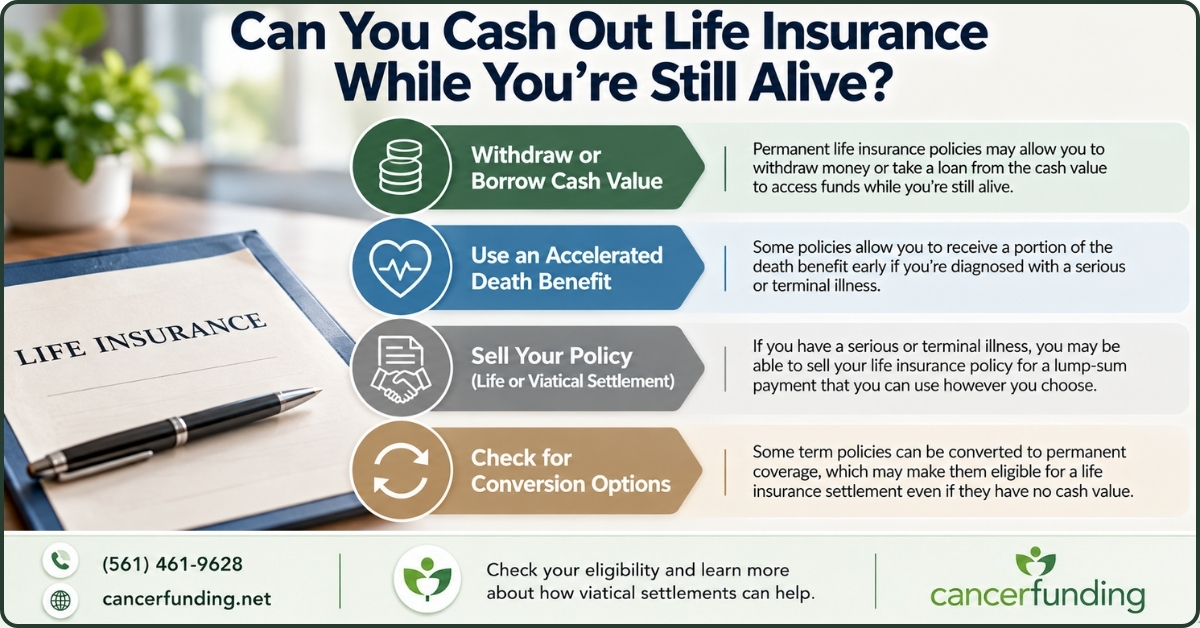
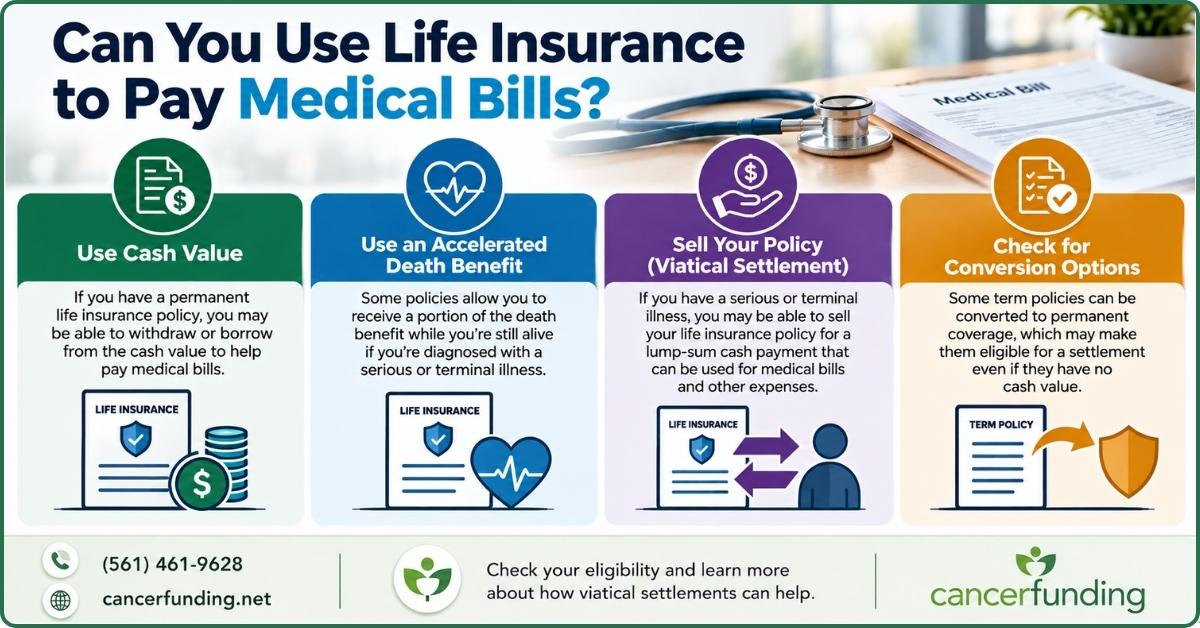
A life settlement is the sale of an existing life insurance policy to a third-party buyer for a lump sum of cash. The buyer takes over the premium payments going forward and receives the death benefit when the time comes. You walk away with cash today and no further obligations under the policy.

A viatical settlement is a life settlement involving someone who has been diagnosed with a serious or terminal illness. It works the same way, but viatical settlements typically produce higher offers and may qualify the seller for complete federal income tax exemption under Section 101(g) of the Internal Revenue Code. For cancer patients, this is usually the relevant category.

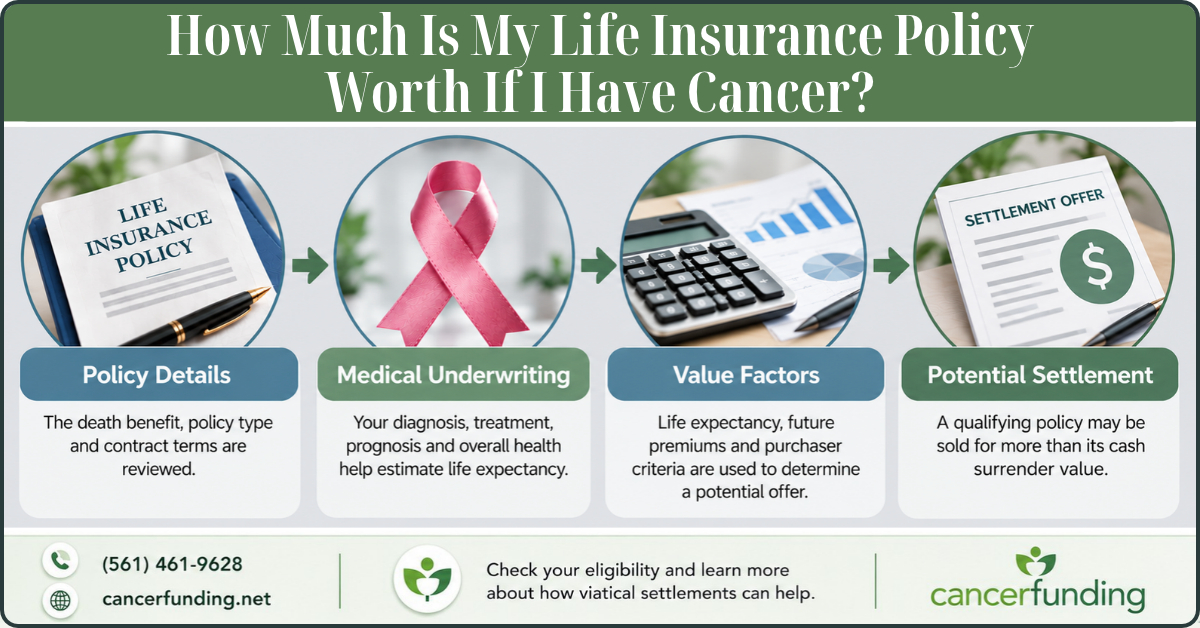
It depends on the size of the policy, the type, the insurance carrier, and the medical situation of the insured. Healthy seniors often receive 8–15% of the face value. Cancer patients and others with serious illness often receive 30–60% or more. Viatical cases involving a terminal diagnosis can sometimes reach 50–80%. The only way to know your number is a formal evaluation — which costs nothing.

Most cancer patients with a life insurance policy can be evaluated. As a starting point, the policy should typically have a face amount of at least $100,000, be more than two years old, and be a transferable type (universal life, whole life, convertible term, or sometimes group life). The insured should have a medical situation that meaningfully affects life expectancy. None of these are absolute rules.

Not necessarily. If your term policy includes a conversion option that lets you convert to permanent coverage, the conversion right itself may make the policy sellable — sometimes years after issue, and even after a serious diagnosis. Don't assume a term policy is worthless without having it reviewed

Group life insurance can sometimes be settled, but usually only after it's been converted to an individual policy. Most group policies have a conversion window — often 30 days after coverage ends. If you're considering reducing hours, taking medical leave, or leaving work entirely, find out what your conversion rights are before the window closes.

Typically 60–120 days from first conversation to cash in hand. Viatical cases — where life expectancy is short — can sometimes be expedited to 30–60 days. The slowest part is usually gathering medical records from your treatment team.

No. A policy review is free, and there is no obligation to sell. If you decide the offer isn't right for you, the process simply ends.

For cancer patients who qualify under Section 101(g) — meaning a licensed physician certifies them as terminally or chronically ill — the entire proceeds may be excluded from federal income tax. Most states follow the federal treatment. Confirm your specific situation with a tax professional before signing.

It can. Means-tested benefits like Medicaid and SSI have strict asset limits, and a lump sum from a settlement can push you over those limits. Legal planning structures exist to preserve eligibility, but they generally need to be set up before the proceeds arrive. Consult an elder law attorney or certified Medicaid planner before moving forward.

No. Health insurance, traditional Medicare, and Social Security retirement or disability benefits are not means-tested and are not affected by a life settlement.

Most states give you a rescission window — typically 15–30 days after closing — during which you can return the proceeds and unwind the transaction. After that window closes, the sale is final.

Yes, and we encourage it. You can authorize a spouse, adult child, attorney, or anyone else to attend calls, review documents, and help you think through the decision.

Not always, but it's rarely a mistake to have one. For larger policies, policies owned by trusts, or any situation involving Medicaid or other public benefits, an attorney is essentially required. A single consultation often costs less than people expect and can prevent costly mistakes.